This article covers ancestral journeys and their historical insights from the past 300 years. For insights about your family’s origins going back 1,000+ years, check out ancestral regions.
Ancestral journeys reveal the shared experiences of a group of people over time. They can show you:
- Where your relatives may have lived in the past 300 years, sometimes down to specific towns or counties
- Where they may have moved around the world
- What their daily life was like
- Events they may have lived through
- And more
You get an ancestral journey when you’re part of a group of AncestryDNA members who all have relatives who once lived in the same place at the same time. Because they lived near each other, they often shared both DNA and life experiences.
In ancestral journeys, we use maps and timelines to trace their journey from the past to the present–toward you. This can help you see how your ancestors’ lives connect to you today and possibly how their lives helped shape yours.
A journey may not capture your family’s story exactly, but it can give you a feel for the lives your relatives lived, the challenges they faced, and the roads they walked.
Exploring your ancestral journeys
- From any Ancestry® page, click the DNA tab and select Origins.
- From your DNA results, choose Journeys.
Don’t see journeys? - Look through your list of journeys and select one to explore. You’ll see:
- An introduction that gives you an overview of the journey’s story.
- A map of places your family may have lived in the recent past, sometimes down to specific counties or towns, and how they moved around the world. This can give you ideas of where to look for records.
- A timeline that tells stories of events your relatives might have lived through and can give you a glimpse into what their daily life may have been like.
- DNA matches who share this journey with you. Message them to discover what they know about your recent shared history.
- (Optional) Back on the journeys tab, below your list of journeys, choose View journeys by parent or Compare.
How we identify ancestral journeys
To identify ancestral journeys, we use Genetic Communities™ technology. This technology lets us look at a large number of DNA matches to find groups of people who share more matches with each other than do people outside of the group. (To learn more about this technology, read our ancestral journeys white paper.)
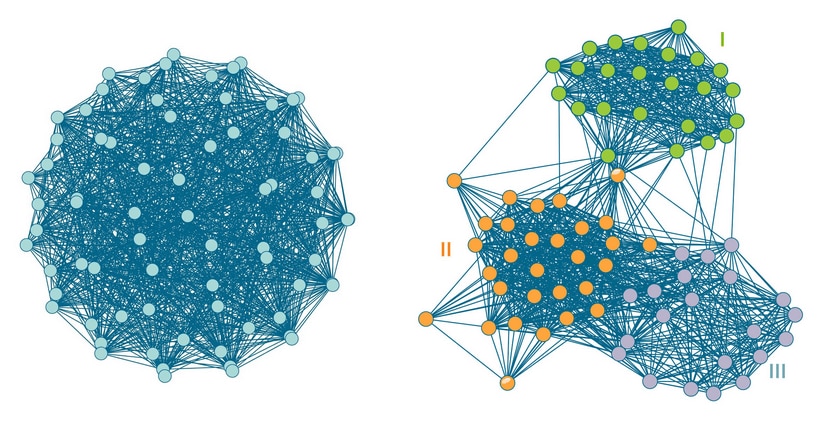
Before using Genetic Communities™ technology (left), we see one large group of DNA matches. After (right), we see three clear groups of interconnected matches (I, II, and III).
These groups of interconnected people often form because of more recent shared history—relatives who lived near each other for a long time. Because they lived near each other, they often shared both DNA and life experiences.
We use this group of highly connected people to train an algorithm for finding other people who are part of this journey. We look at features like how many of your matches are a part of this journey and how closely you’re related to those matches.
How we find their stories
Once we identify a journey, we use data from family trees linked to the DNA results of people who share the journey to help us find the stories the journey tells.
First, we look at birth dates and locations from trees to find where people lived. We also look at surname and region data for clues.
Then, by comparing the birthplaces of generations of parents to the birthplaces of their children, we can see when and where some of these groups moved.
Once we know where and when these people lived and where they moved to, we match these facts with the history that best explains it.
For example, one journey might capture people leaving Munster, Ireland, during the Great Famine, while another follows African Americans from Mississippi to Chicago as they left the South as part of the Second Great Migration in the early 20th century. Others capture the story of people who have lived in the same place for centuries—and still do.
How we name ancestral journeys
Most journeys are named after the places where these groups of people once lived or the communities they were part of. For example:
- Hastings & Southwestern Kent
- Carroll & Holmes County African Americans
- Napierville, Quebec, French Settlers
Getting ancestral journeys
You’ll get an ancestral journey when you have a lot of DNA matches who are also part of that journey.
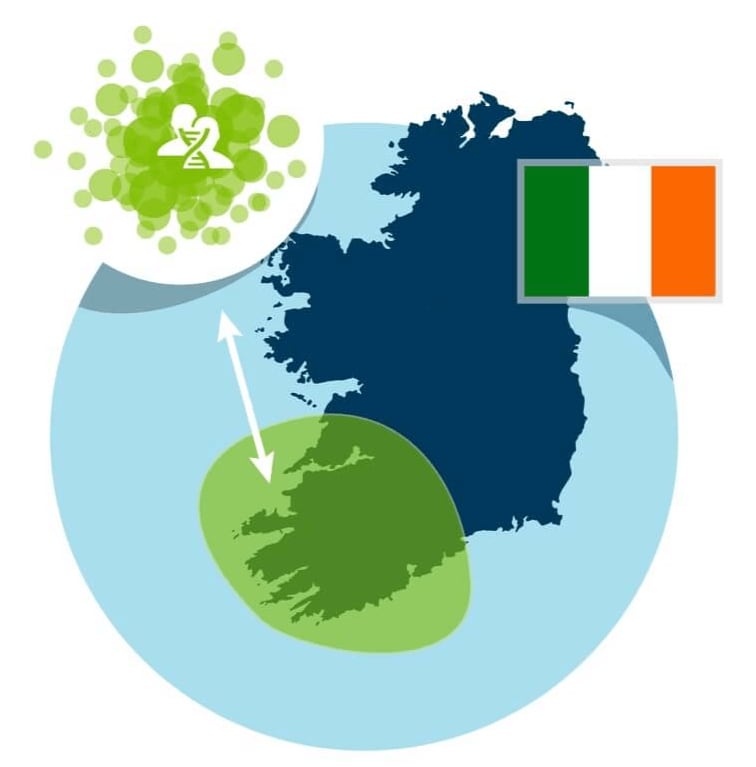
To get a specific ancestral journey, you must have other matches—often of close genetic relationship—who are also a part of that journey. The more DNA you share with other journey members, the more likely you are to be connected to it.
However, sharing an ancestral journey with someone doesn’t mean you’re relatives. It’s possible that you’re both connected to the journey’s founding ancestors through separate pieces of DNA. Similarly, not all DNA matches will share the same ancestral journeys. This is because they may not have inherited the specific pieces of DNA linked to those journeys. (Read more about how DNA is passed down and inherited.)
Don't have a journey yet?
You'll only get assigned to ancestral journeys you have a strong genetic link to. The more generations there are between you and the time and place of a journey, the less likely you’ll connect to that journey. Also, it’s more likely that you’ll connect to a population that both of your parents descended from than to a population that only one of your grandparents comes from. This is because even if you have ancestors from the same time and place as a journey, you may not have inherited enough of their DNA that connects them to that journey. This is partly due to chance and partly because the more generations there are between you and an ancestor, the less likely it is that DNA from that specific ancestor will be passed down to you. (Read Understanding Inheritance.)
As more people take AncestryDNA tests and link trees to their results, we'll be able to discover and add more journeys.
Still curious to understand more?
Cool--we're glad you're as interested in genetics as we are. Check out our ancestral journeys white paper to learn more.
Frequently asked questions
Why don’t I have a journeys tab?
The journeys tab only appears once you have a journey assigned. If it’s not there yet, check back later—results are periodically updated based on new data and scientific advancements.
Why don’t I have any ancestral journeys?
If you don't have a strong genetic link to a journey, or if we haven't identified one yet that links to your ancestors’ past, it won't appear among your results.
Why don’t journeys have percentages, like regions?
Unlike regions, where we compare and then assign sections of your DNA to the regions they’re most similar to, journeys are based on how groups of DNA matches are connected because of recent shared history, not on the percentage of DNA you and those matches share.
What are the differences between ancestral regions and journeys?
To learn about their differences, read Key Differences Between Ancestral Regions and Journeys.
Where can I find more FAQs about ancestral journeys?
To find more answers to common questions, check out our AncestryDNA® Regions and Journeys FAQ page.