Soundex is an algorithm used to search for alternate spellings of a name, using the way the name is pronounced. To learn how to search using special symbols in place of unknown letters in a word, see Searching with Wild Cards.
Searching by Soundex variations can help you find records despite differences in spelling (such as “Smythe” for “Smith”) or errors (such as “Smth” for “Smith”) in the record or the record index.
How to use Soundex
Soundex searches ignore all vowels and the consonants h, w, and y, because these letters are most commonly switched, added, and deleted. With those letters removed, all that remains of both “Smythe” and “Smith” is “Smt”; both names would produce the same results in a Soundex search.
Go to the search page
-
Enter a name to search.
-
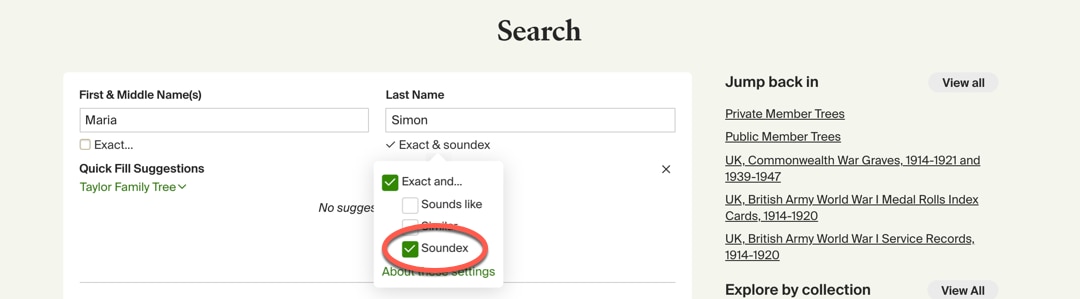
Beneath the first or last name, click the Exact box and select Soundex.
-
Click Search.
How Soundex works
When you search using the steps above, Ancestry® performs a Soundex search for you automatically, and you don’t need to search using the rules below.
Soundex searches were created by the Worlds Progress Administration in the 1930s to give the same codes to names that sounded the same but had various spellings. Each Soundex code consists of one letter and three numbers, and always begins with the first letter of the name (“S” for “Smith,” for example).
The numbers in the code are determined by the remaining consonants (minus h, w, and y) in the name, with zeros filling in where consonants are lacking. This table shows the corresponding numbers and letters:
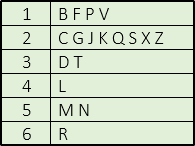
The Soundex code for “Smith" is “S530,” since it begins with an S, m = 5, t = 3, and we don’t count h.
These rules apply as well:
- Treat double letters as single letters; apply just one number for each set of double letters (Merrinz = M652).
- Create only unique numbers in a sequence. There should never be two of the same numbers next to each other in a Soundex code (Liefbert = L163; ignore the "b" because it has the same code as the "f”).
- Ignore consonants past four characters (Hastings = H235; ignore the "gs").
- Mc and Mac are not considered prefixes; they’re considered part of the surname (McTuiga = M232).