When you purchase an AncestryDNA® kit, we send you a package with everything you need to register your kit and return your saliva sample. You'll register your kit, fill the tube with saliva, and send it back to us.
In most cases, within 6 weeks of the date we receive your sample, we'll post your results to your Ancestry® account. When your results are ready, you'll receive an email letting you know.
Your results will include your ancestral origins, DNA matches, and some traits.
Buy AncestryDNA®
Ancestral origins
The ancestral origins portion of your AncestryDNA results include 2 main types of results: ancestral regions and journeys.
Each is calculated using different scientific methods and provides unique insights.
Ancestral regions
Ancestral regions show where your ancestors likely lived 1,000+ years ago and what percentage of your DNA looks most similar to DNA from people with long histories in those regions.
To do this, we compare your DNA to the DNA of people with known origins from around the world (called a reference panel) to create a breakdown of your regions by percentage.
Here's an example.
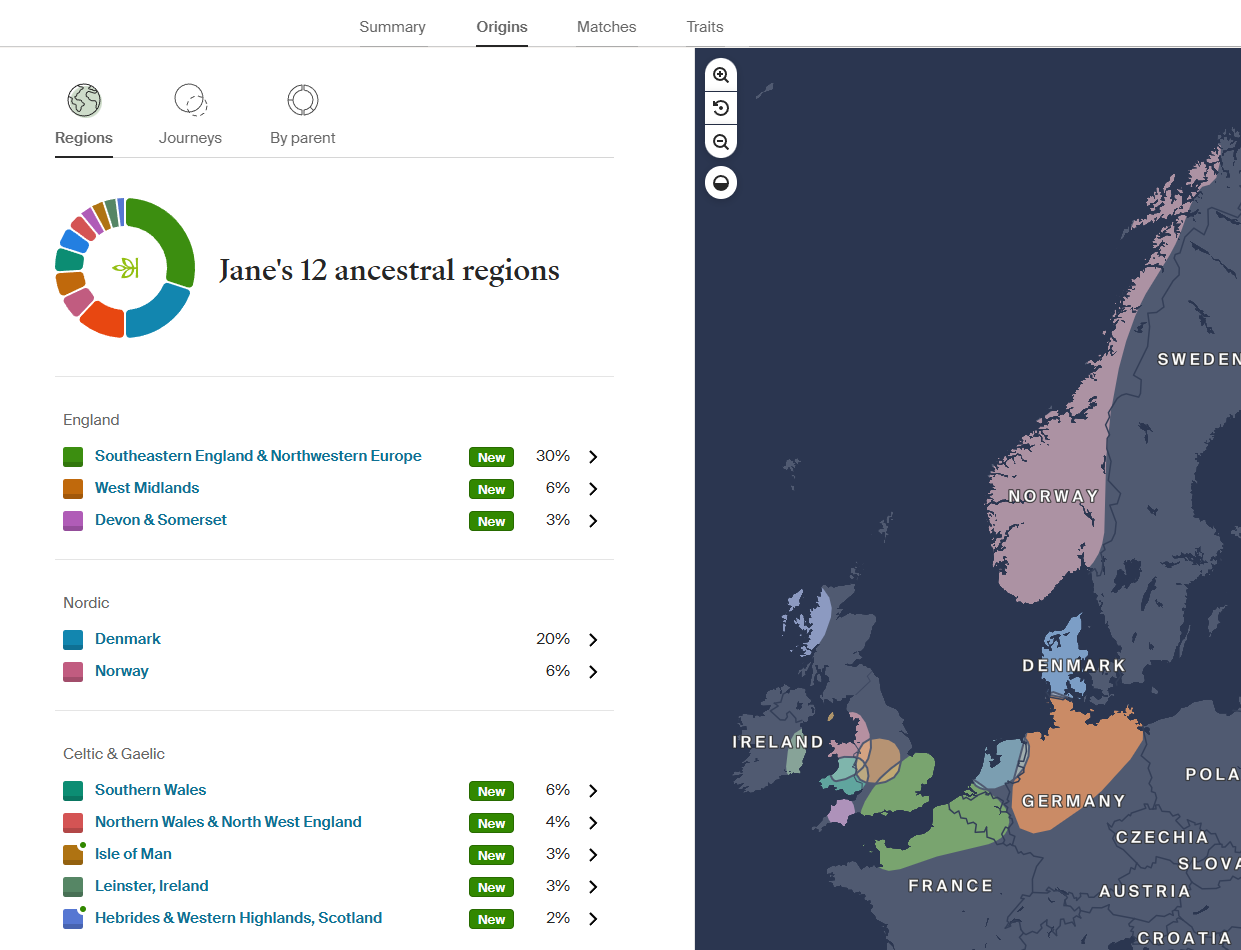
Hovering over a region in your list of regions will highlight that region on the map. Selecting a region from the map or list provides more information about it.
To learn more, see Ancestral Regions in AncestryDNA®.
Ancestral journeys
Ancestral journeys show where your relatives may have lived or moved in the past 300 years, sometimes down to a county level (or smaller), and describe some of the historical events they may have experienced.
Journeys are based on places that groups of interconnected DNA matches are connected to. You get an ancestral journey when a lot of your DNA matches likely descend from a group of people who lived in the same place around the same time.
Here’s an example:
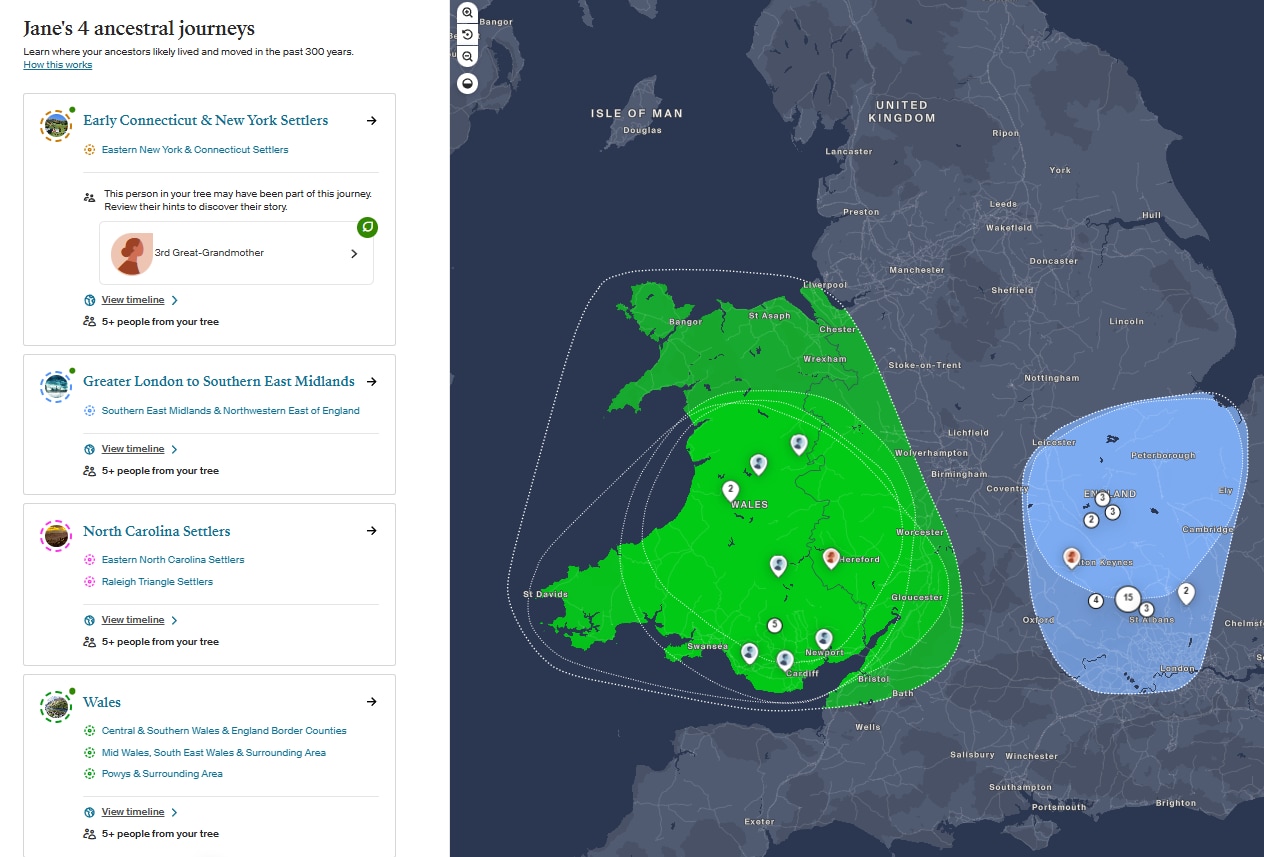
Selecting a journey will tell the story of the group of people who likely experienced it—a story your ancestors may have been part of.
To learn more, see Ancestral Journeys in AncestryDNA®.
Matches
DNA matches are other AncestryDNA® members who share DNA with you. With DNA matches turned on, you can see a list of your matches and how you may be related. They’ll also be able to see you on their match lists.
Your list of DNA matches will show you how related you are to the people you match with. Here's what your list may look like.
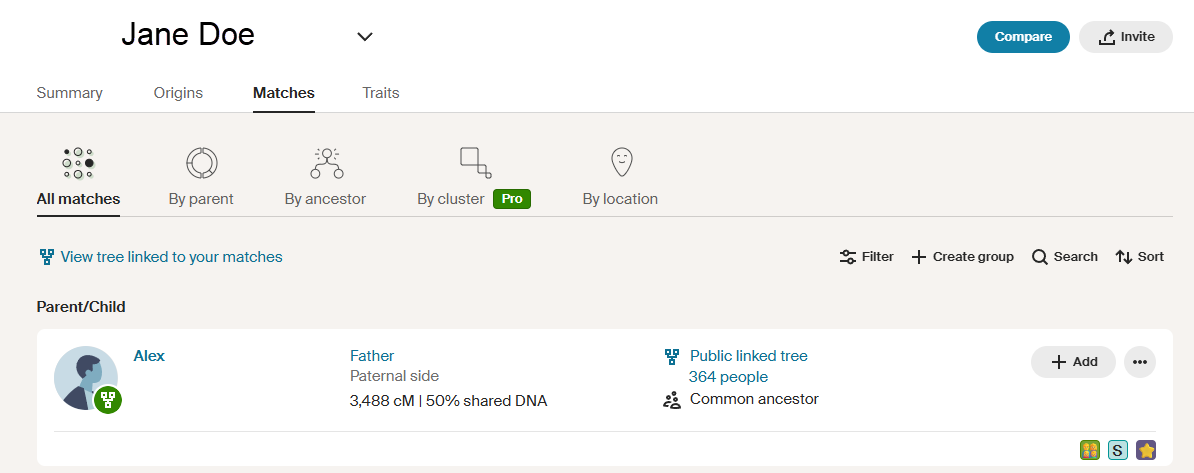
Your matches are based only on your DNA—we don't take your family trees into account.
You can message your matches, write notes about each one, edit your relationships, organize them with groups and filters, and see if they have a family tree (including its size and whether it's public, private, or unlinked).
To see your matches’ full trees or use the features that rely on access to trees (matching surnames and birthplaces, common ancestors, and ThruLines®), you'll need an Ancestry family history membership.
To learn more, see AncestryDNA® Matches.
Traits
Your DNA reveals more than just your origins. It also holds information about physical traits you can see as well as hidden traits, like personality and fitness. With AncestryDNA, you can explore, compare, and share insights about traits, like being a morning or night person, tendency to take naps, and heart rate recovery.
More traits can be purchased with AncestryDNA®, purchased as an upgrade to AncestryDNA® (where available), or included as part of an Ancestry family history membership. If you access traits through a membership, you'll have access to all traits, for the duration of your membership.
To learn more, see AncestryDNA® Traits.
Privacy
Your privacy is important to us. We provide many privacy options so you can control how Ancestry and other customers view your information. Visit Ancestry's official Privacy Center and Privacy Statement page for detailed information.